
In manga, the dot has various meanings and functions, ranging from sentence endings to sound effects and emotional expressions.
Dots in manga also help to simulate sounds (e.g., どん・ぱん simulates an explosion sound), express emotions (e.g., ええっ! expressing surprise), and establish the rhythm of the story.
Understanding how to recognize and use dots helps readers grasp the correct meaning and emotions in manga, enriching the overall reading experience.
Join HariManga in exploring more about What do dots next to Japanese characters mean in manga through the article below.
What do dots next to Japanese characters mean in manga?
In manga, the dots next to Japanese characters have various meanings.
The small circle (。 – kuten) is a punctuation mark used to end sentences, while the small dot between words (・ – nakaten) is used to separate words or list items.
Dots above or below characters (such as 圏点 – kenten) are used for emphasis (like underlining) or to indicate furigana pronunciation, helping readers understand the meaning and pronunciation of complex kanji characters accurately.
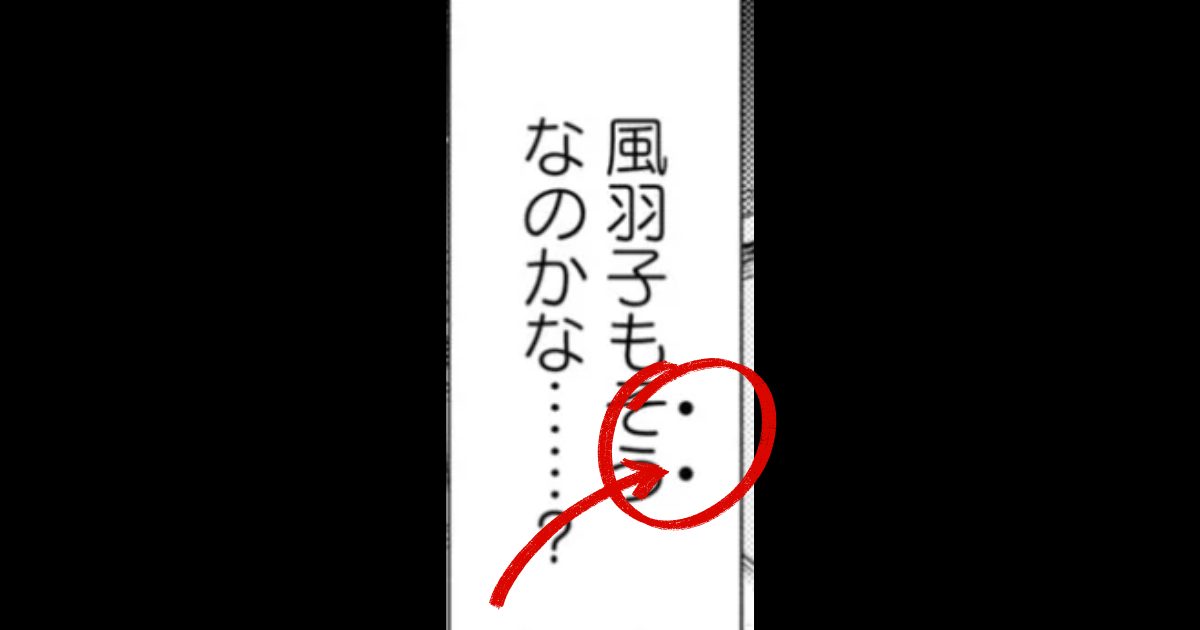
Common types of dots in manga
In manga, dots are categorized into various types, each serving a unique function and influencing the way the story is read and understood.
Below are the most common types of dots in manga and how they are used.
Full stop (。 – 句点 Kuten)
The full stop (Kuten) is used to mark the end of a sentence, similar to a period in English.
It is the most common and widely used punctuation mark in manga.
Example: “今日はいい天気ですね。” (The weather is nice today, isn’t it?)
Middle dot (・ – Nakaten / 中黒)
The middle dot (Nakaten) is used to separate words, especially in foreign loanwords or lists of items.
It helps make the sentence clearer and easier to read.
Examples:
- コンピュータ・サイエンス (Computer Science)
- 東京・大阪 (Tokyo, Osaka)
Dot above/below (圏点 Kenten / 傍点 Bōten)
Dots above or below characters (Kenten and Bōten) are used for emphasis in manga, similar to underlining or bolding in English text.
Examples:
- “今日は雨が降るでしょう。” (It will rain today.)
- Furigana: 使用方法 (しようほうほう) (Usage)
Ellipsis (… – Santen)
The ellipsis (Santen) in manga represents a pause, hesitation, or an unfinished thought, creating a sense of suspense or curiosity for the reader.
Examples:
- “私の名前は…。”(My name is…)
- “彼は…どうしたらいいのか分からない。” (He… doesn’t know what to do.)
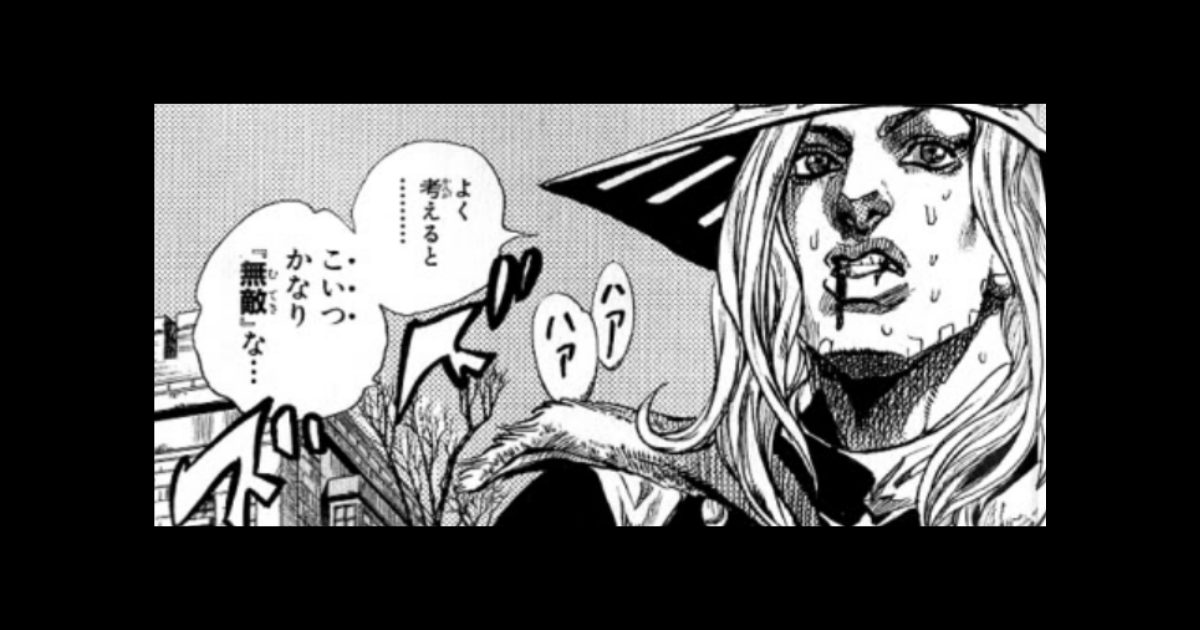
What do dots mean in different contexts in manga?
In manga, the meaning of dots varies depending on the context in which they are used.
Dots as part of sound effects
Dots play a key role in simulating sound effects in the manga world.
Manga artists often use dots in combination with words to create distinctive sounds, allowing readers to better visualize the scene and actions.
Examples of sound effects in manga:
- “どん・ぱん” (Don-pan): Mimics the sound of an explosion or impact.
- “きらきら” (Kira-kira): Represents sparkling light, creating a sense of brilliance and shimmer.
Dots in expressing emotions and tone
Dots can also be used to express emotions in manga.
They help emphasize strong feelings of characters, such as anger, joy, or surprise, by altering their usage in specific situations.
Examples of dots emphasizing emotions:
- Anger: “なんでこんなことを…!” (Why did this happen…!)
- Joy: “やった!” (Yatta! – I did it!)
Dots in manga are not just punctuation; they play a vital role in enhancing the storytelling, adding depth to sound effects and emotional expression.
How to recognize and understand the meaning of dots in manga
Here are some helpful tips and examples to easily recognize and understand what the dots next to Japanese characters mean in manga.
Dots in manga can have different meanings depending on the context and how the author uses them.
Below are some basic tips to help you identify and understand the meaning of dots in manga:
Pay attention to context
The meaning of dots can change depending on the situation in the story.
For example, a dot can represent a pause, convey a character’s emotion, or simulate a special sound.
Look for dots combined with other characters
When dots are combined with other words or characters like Dakuten (゛) or Handakuten (゜), they can alter the pronunciation or meaning of a word, helping to emphasize or clarify emotions.
Pay attention to repeated dots
In manga, when dots appear repeatedly or with sound-effect words, it could be a way for the author to enhance rhythm, build tension, or highlight actions or sounds.
Recognize different types of dots:
- Middle Dot (・): Often used to separate foreign loanwords or list items, such as in コンピュータ・サイエンス (Computer Science). It typically appears when manga introduces new terms or borrowed foreign words.
- Full Stop (。): Used to end a sentence, as seen in “今日はいい天気ですね。” (The weather is nice today, isn’t it?). This helps conclude the meaning of the sentence and clarifies the reading flow.
By recognizing these different types of dots and understanding their context, you can deepen your understanding of the story and the emotions the author wishes to convey.
Tips for reading manga with dots
To correctly understand the meaning of dots next to Japanese characters in manga, it’s important to pay attention to how the dots are used in each context.
Here are some key tips to keep in mind when reading manga with dots:
- Middle Dot (・): Used to separate foreign words or list items. For example, コンピュータ・サイエンス (Computer Science).
- Full Stop (。): Used to end a sentence, like in “今日はいい天気ですね。” (The weather is nice today, isn’t it?).
- Ellipsis (…): Represents hesitation or unfinished thoughts. For example, “彼は…どうしたらいいのか分からない。” (He… doesn’t know what to do).
- Sound Effect Dots: Used to create sound effects, like “ん・ぱん” (Don-pan) to simulate the sound of a collision or explosion.
- Emotion-Expressing Dots: Emphasizes the character’s emotions, like surprise or anger. For example, “ええっ!” (Ehh!) expresses surprise.
These tips will help you better understand how dots shape the meaning and emotional tone in manga.
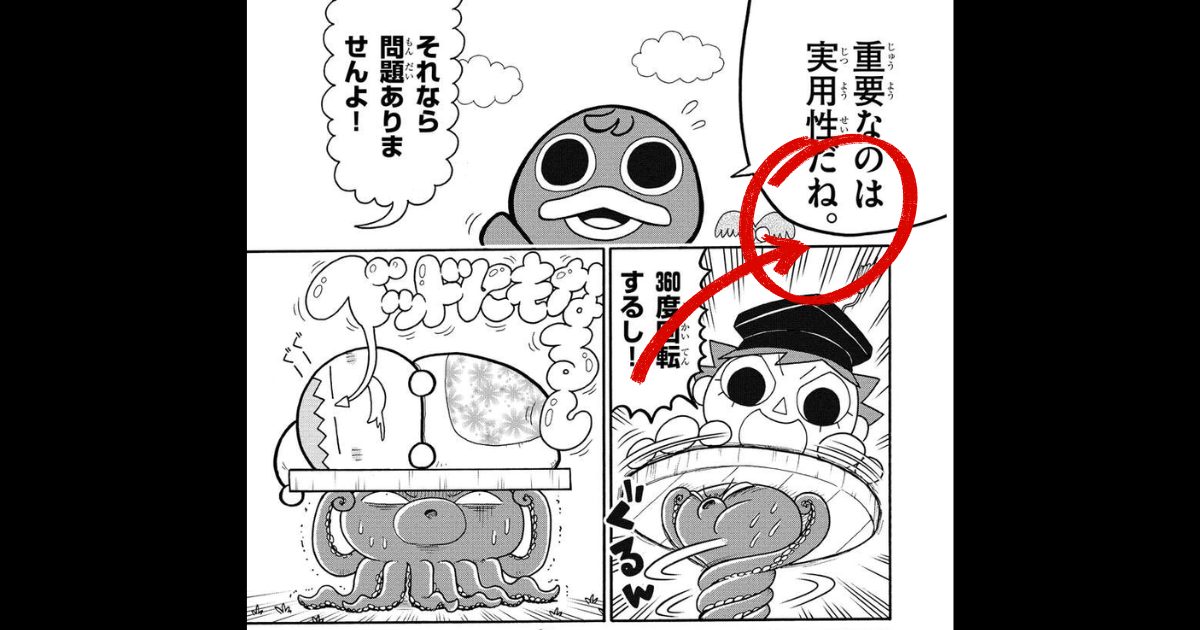
Why are dots important in manga?
Dots in manga play a crucial role in creating rhythm, emphasizing emotions, and simulating sounds.
- Creating Rhythm: Dots help determine the pace and flow of the story, slowing down or speeding up the narrative depending on the situation.
- Emphasizing Emotions: Dots highlight the strong emotions of characters, such as surprise or anger, adding depth to their feelings.
- Simulating Sounds: When combined with words, dots create sound effects in manga, like “どん・ぱん” (Don-pan) mimicking the sound of an explosion.
- Creating Pauses: Dots create pauses, helping the reader to better understand and feel the progression of the story.
- Clarifying Sentence Structure: Dots clarify the structure of sentences, making it easier for the reader to follow the flow of the narrative.
By understanding the importance of dots in manga, readers can more fully appreciate the emotional and narrative layers that dots help convey.
FAQs – Common questions about “What do dots next to Japanese characters mean in manga?”
Here are some frequently asked questions about the meaning of dots next to Japanese characters in manga:
Why does manga use the middle dot (・)?
The middle dot (・) also known as Nakaten, is used to separate foreign words or items in a list. For example, コンピュータ・サイエンス (Computer Science) uses this dot to separate words.
How can dots represent emotions in manga?
Dots in manga can emphasize a character’s emotions. For example, “ええっ!” (Ehh!) shows surprise, while “なんでこんなことを…!” (Why did this happen…!) shows anger.
Can dots simulate sounds in manga?
Yes, dots combined with words can simulate sounds in manga. For instance, “どん・ぱん” (Don-pan) mimics the sound of an explosion or a loud impact.
Are there any special dots in Kanji characters?
In Kanji, dots are sometimes used along with Furigana (small characters above Kanji) to help readers understand pronunciation. They can also emphasize specific Kanji characters in manga.
When should I pay attention to dots in manga?
You should pay attention to dots in manga when you encounter the middle dot (・) separating foreign words, the ellipsis (…) indicating emotion or hesitation, or the full stop (。) marking the end of a sentence to better understand the rhythm and emotions of the story.
HariManga has helped you understand “what do dots next to Japanese characters mean in manga.” Dots in manga are not just punctuation marks but help create sound effects, emphasize emotions, and define the rhythm of the narrative.
Pay attention to these dots in manga to better understand the context and emotions the author wishes to convey.
