
Blue Lock is a closed residential facility where players live on site under strict routines, with meals provided internally.
In Blue Lock, the facility gives players food in a shared dining hall with set meal times. They do not go shopping or cook, and the meals are simple athlete foods like rice, curry, natto, and meat to help them train and recover.
Blue Lock serves scheduled, performance focused meals like rice, curry, natto, and meat dishes.
Players do not typically cook, and food is provided reliably through the facility.
Read this HariManga guide to learn how did they get food in blue lock and understand how the facility’s meal system supports the players’ training.
What is Blue Lock’s living setup?
Blue Lock is a fully closed residential training facility where players live on site instead of commuting.
Their daily life is tightly controlled to reduce distractions and keep everyone focused on improving as a striker, with shared living spaces and strict rules that reinforce discipline.
Inside the complex, everything is organized around a routine of training, recovery, and constant evaluation.
Players have sleeping quarters, communal areas, and dedicated training and rehabilitation spaces, and living close to rivals keeps the competitive pressure high even during downtime.
Because the program controls the entire environment, it also standardizes practical needs like meals and nutrition.
That is why, when people ask how did they get food in Blue Lock, the answer is that food is provided within the facility through a managed internal dining setup rather than players sourcing it themselves.
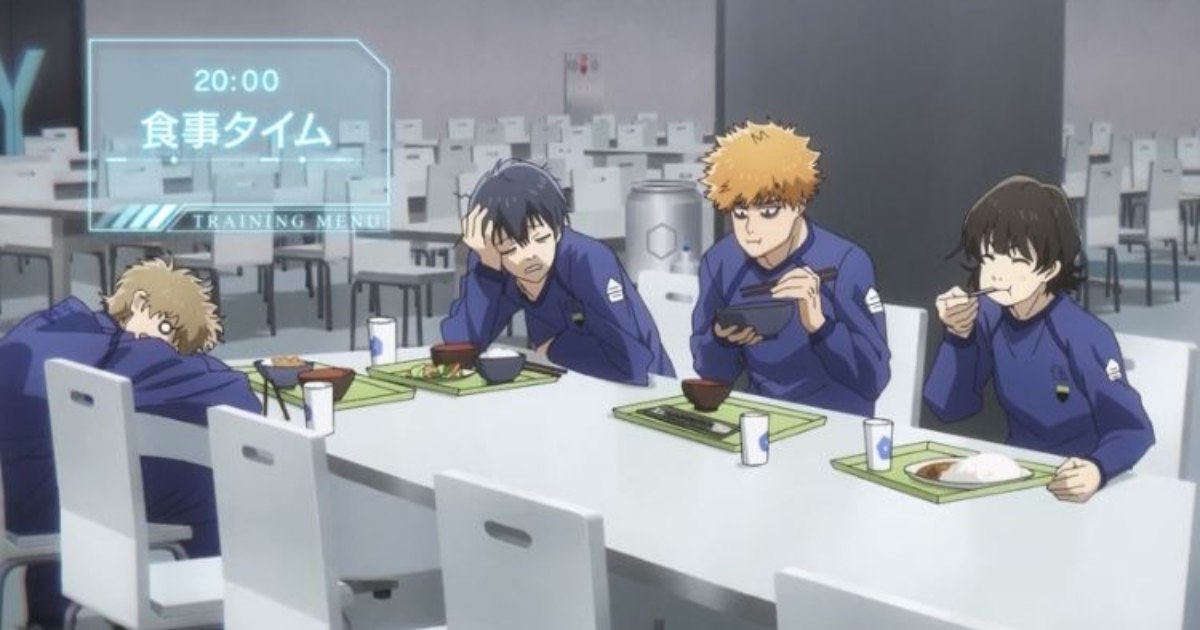
How did they get food in Blue Lock?
In Blue Lock, the players get food directly from the facility through a communal dining hall that serves scheduled meals built to support intense training.
They do not shop for groceries or cook independently as part of daily life inside the program, since the environment is designed to be controlled and efficient.
The menu is typically framed as high protein and energy dense, leaning into familiar Japanese staples that work well for athlete fueling, such as rice, curry, natto, and meat based dishes.
The story also uses food to add small character details, including Isagi being closely associated with natto, often eaten with rice and egg and Kunigami being linked to apple curry.
Overall, meals function as part of the system, with players eating together after training in an organized setup that prioritizes recovery, muscle building and consistency, which is the core answer to how did they get food in Blue Lock.
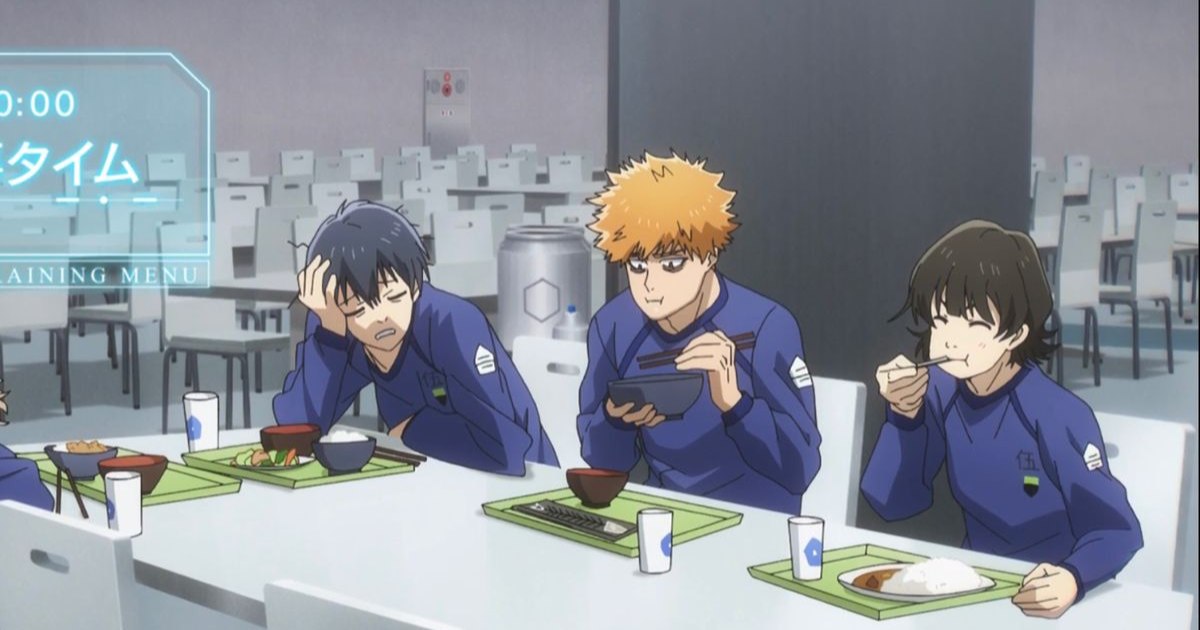
What kind of food do they get in Blue Lock?
After understanding how meals are provided inside the facility, the next question is what those meals actually look like day to day.
Blue Lock’s food is designed to fuel performance, recovery, and muscle growth, not comfort eating.
Typical Japanese staples shown or implied
Blue Lock’s meals commonly feature Japanese staples like rice, curry style dishes, natto, and meat based mains, often paired with simple sides to round out the plate.
The overall impression is practical, filling food that can be served consistently to a large group on a set schedule.
High-protein and high-calorie focus for athletes
The menu is framed around performance, so it prioritizes protein for muscle repair and enough calories to sustain repeated high intensity sessions.
Meat dishes, protein rich items like natto, and energy dense carbs like rice and curry fit that athlete focused intent.
Hydration and recovery considerations (sports nutrition basics)
Even when not shown in detail, a facility like Blue Lock would logically emphasize hydration and recovery, meaning regular fluids and balanced electrolytes alongside meals.
The goal is to support training output and reduce fatigue, which is standard sports nutrition practice for intensive programs.

Why does Blue Lock emphasize diet and preferences?
Blue Lock emphasizes diet because nutrition directly affects stamina, recovery, and muscle growth during intense training.
The story also uses food preferences to add quick character detail and routine.
So how did they get food in blue lock ties back to controlled meals that keep performance consistent.
Can players cook their own meals in Blue Lock?
Blue Lock does not present cooking as a normal daily activity for the players.
The facility keeps schedules and nutrition standardized to reduce distractions and variables.
That is why how did they get food in blue lock is mainly answered by meals provided through the program.
Do they ever run out of food or face rationing?
The series does not treat food as a scarce resource or a major plot conflict, since Blue Lock is portrayed as well funded and tightly managed.
How did they get food in Blue Lock is therefore shown as organized, stable provisioning through the facility, not rationing.

Is the Blue Lock food system realistic?
A communal dining hall and athlete focused meal planning are realistic features of elite training environments.
Scheduled meals with high protein and sufficient calories align with sports nutrition basics.
So how did they get food in blue lock is believable in concept, even if Blue Lock’s overall setup is dramatized.
FAQs
Below are the most common questions readers ask about how did they get food in blue lock, with clear, quick answers.
Use these FAQs to confirm the basics without rereading the full breakdown.
How did they get food in Blue Lock?
Blue Lock provides meals centrally inside the facility through a shared dining setup.
Food is scheduled and designed to support intense training rather than individual convenience.
Do Blue Lock players pay for food?
The story does not show players paying for meals.
Food is treated as part of the program’s controlled environment and included in the facility’s support system.
What do Blue Lock players usually eat?
They usually eat performance focused Japanese staples and protein forward meals such as rice, curry, natto, and meat dishes.
The series sometimes highlights personal favorites to add character detail.
Is there a cafeteria in Blue Lock?
Yes, the setting implies a communal dining area where meals are served to participants.
Players are shown or suggested to eat together in an organized facility space.
Can they choose what to eat?
Choice appears limited because meals are provided as a set plan for consistency.
Preferences may be mentioned, but the default is eating what the facility serves.
Do they cook inside the facility?
Cooking is not emphasized as a routine part of life in Blue Lock.
The structure suggests meals are prepared and served by staff rather than cooked by the players.
In short, how did they get food in blue lock comes down to a centralized, facility managed meal system designed to fuel training, recovery, and consistent performance.
With communal dining, athlete focused menus, and limited personal choice, Blue Lock keeps nutrition as controlled as the competition itself.
For more Blue Lock breakdowns and quick character insights, explore the latest updates on HariManga.
